How Thick Should a Concrete Slab Be? Patios, Driveways, Garages and Sheds
Typical concrete slab thicknesses for patios, walkways, garage floors, driveways and equipment pads, plus base, reinforcement and control-joint basics.
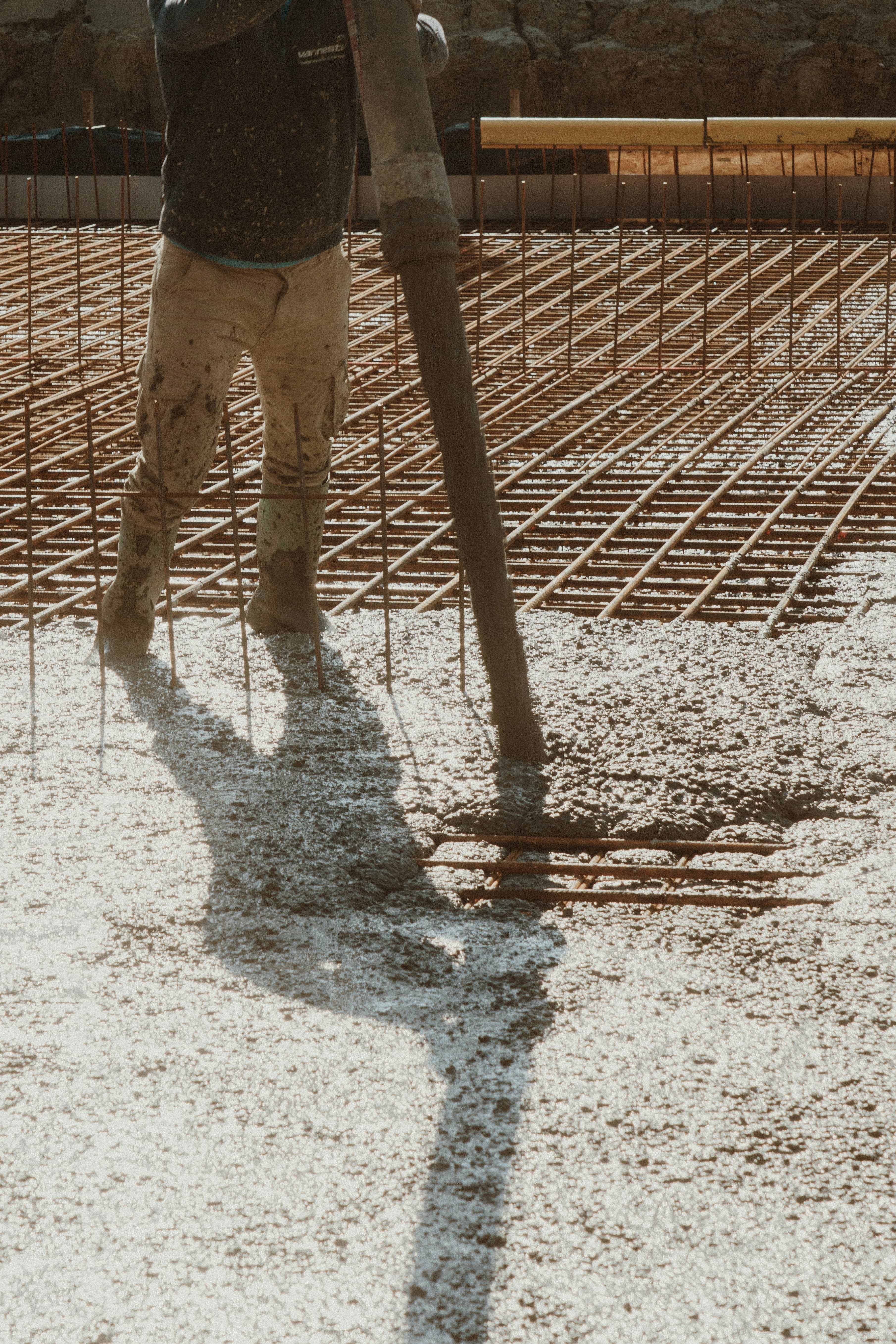
Thickness is the single biggest factor in how much concrete you order and how well the slab performs. Going from 4 to 5 inches adds 25% more concrete, and from 4 to 6 inches adds 50%. Too thin, and the slab cracks under loads it was never designed for. These are the thicknesses commonly used for residential work; local codes, soils and engineers have the final word for anything structural.
Typical thickness by project
| Project | Typical thickness | Notes |
|---|---|---|
| Walkway or sidewalk | 4 in | Foot traffic only |
| Patio | 4 in | Thicken edges if furniture or a grill sits at the perimeter |
| Shed floor | 4 in | Thicker edges under walls on larger sheds |
| Garage floor, passenger cars | 4–5 in | Check local code |
| Driveway, cars and SUVs | 4–5 in | 5 in common in freeze–thaw climates |
| Driveway with RVs or trucks | 6 in or more | Consider reinforcement and stronger mix |
| Hot tub or heavy equipment pad | 6 in or more | Follow the manufacturer's requirements |
How thickness changes the order
For a 20 × 20 ft garage floor (400 sq ft):
| Thickness | Cubic yards | With 10% extra |
|---|---|---|
| 4 in | 4.94 | 5.43 |
| 5 in | 6.17 | 6.79 |
| 6 in | 7.41 | 8.15 |
Run your own numbers in the concrete calculator.
The base matters as much as the slab
Concrete is strong in compression but weak when it bends. A slab on soft or uneven ground bends and cracks. A properly prepared base gives it uniform support:
- Remove topsoil, roots and organic material.
- Compact the subgrade.
- Add about 4 inches of compacted crushed stone; see the gravel calculator to size it.
- Use a vapor barrier under interior slabs to limit moisture coming up from the ground.
Thickened edges
Edges are the weakest part of a slab because they are supported on only one side. Many patios and shed floors are poured with a thickened edge, often 8–12 inches deep and about as wide, around the perimeter. Include the extra volume in your order: for a 40 ft perimeter with an edge 12 in wide that goes 4 in deeper than the slab, that's 40 × 1 × 0.333 = 13.3 extra cubic feet, about half a cubic yard.
Reinforcement
Steel rebar or welded wire mesh doesn't stop concrete from cracking, but it holds cracks tightly together so the slab stays level. Fiber-reinforced mixes help control small shrinkage cracks. For a driveway that will carry heavy vehicles, rebar on a grid, supported on chairs so it sits in the middle of the slab, is common practice.
Control joints
All concrete shrinks as it cures, and it will crack somewhere. Control joints are grooves cut or tooled into the surface to make it crack in straight lines where you want. A common rule of thumb places joints at a spacing of 24 to 36 times the slab thickness: for a 4-inch slab, that's every 8 to 12 feet. Joints should be at least a quarter of the slab's depth and should divide the slab into roughly square panels.
Strength of the mix
Residential slabs typically use concrete of about 3,000–4,000 psi. Exterior slabs in climates with freezing and thawing often use air-entrained concrete, which contains tiny bubbles that relieve pressure from freezing water. Tell your supplier what you are pouring and where; see concrete mix ratios and strength.
Summary
Four inches suits most patios, walkways and sheds; five inches is a safer choice for driveways and garages, and six or more for heavy loads. A compacted base, control joints and the right mix matter as much as thickness.
Further reading from official sources
- Concrete basics and resources – American Concrete Institute (ACI)
- Cement and concrete technical resources – Portland Cement Association (PCA)