Gravel for Drainage and French Drains: Which Stone and How Much
Choose the right gravel for French drains, dry wells and downspout drainage, and calculate how much stone a trench needs after subtracting the pipe.
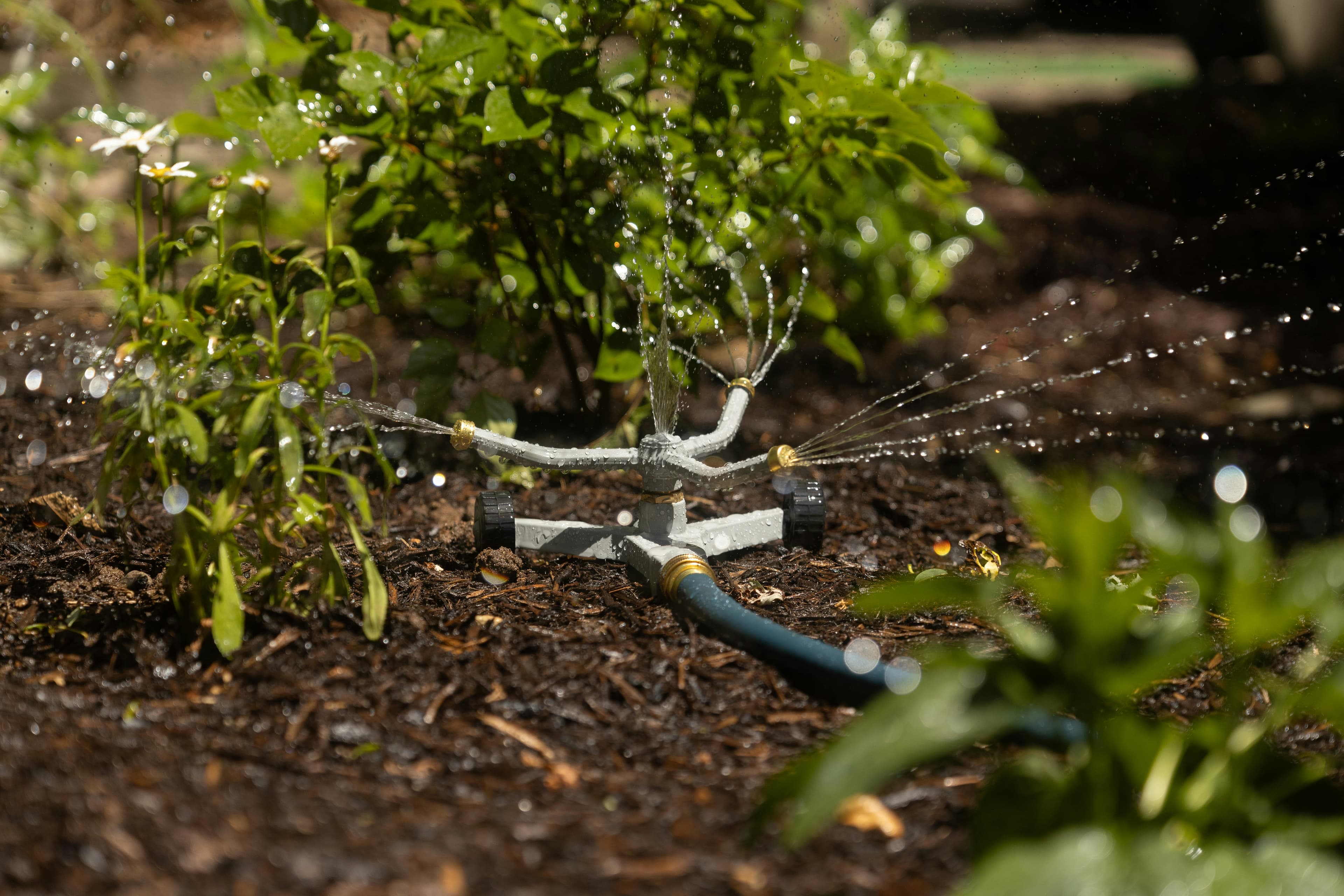
Standing water near a foundation, a soggy corner of the lawn, or a downspout that floods a flower bed are all problems that gravel can solve, as long as it is the right gravel. Drainage relies on empty spaces between stones for water to move through. Choose a stone that keeps those spaces open.
The best gravel for drainage
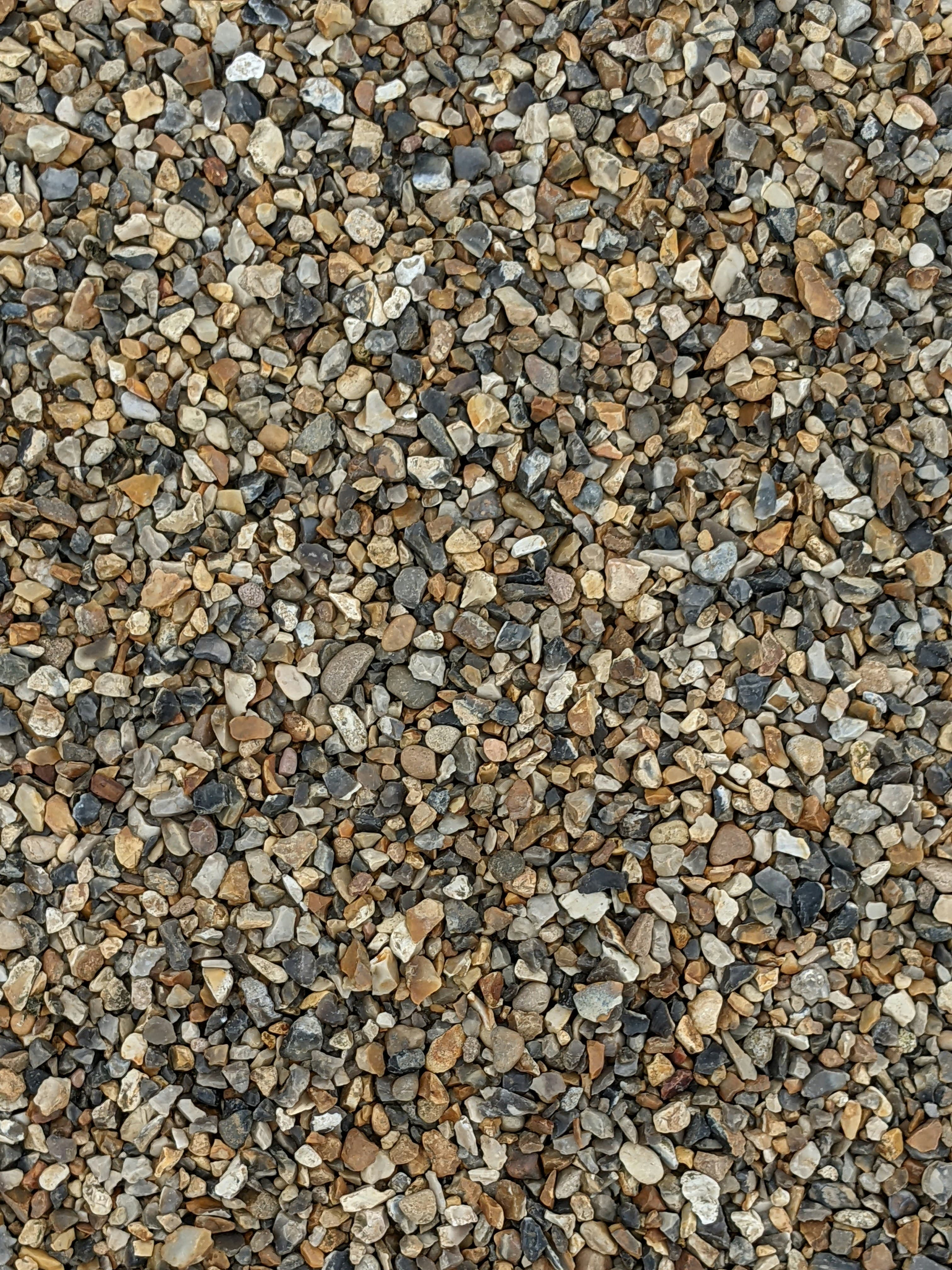
Use washed, angular stone of a uniform size, most commonly #57 (about ¾–1 inch) or similar clean crushed stone. "Washed" means the fine dust has been removed. "Uniform" means there are no small particles filling the gaps between the larger ones.
Avoid crusher run, road base and anything sold "with fines." Those mixes are designed to compact into a solid layer, which is exactly what you don't want in a drain. Pea gravel can work, but its smaller gaps clog with silt more easily.
Anatomy of a French drain
- A trench, typically 6–12 inches wide and 18–24 inches deep, sloping toward a safe outlet.
- A lining of non-woven geotextile fabric to keep soil from washing into the stone.
- 2–3 inches of gravel on the trench floor.
- A perforated pipe, usually 4 inches in diameter.
- More gravel to fill around and above the pipe.
- The fabric folded over the top, then a cap of soil and sod or decorative stone.
The trench needs a continuous fall so water keeps moving. A slope of at least 1%, about 1 inch for every 8 feet, is a common minimum. Before digging, call 811 to have underground utilities marked, and make sure the outlet does not send water onto a neighbor's property.
How much gravel does a French drain need?
Calculate the trench volume and subtract the space the pipe takes up:
trench volume (ft³) = length × width × gravel depth
pipe volume (ft³) = 3.1416 × (pipe diameter ÷ 2)² × length
Example: a 50 ft trench, 12 inches wide, with 18 inches of gravel and a 4-inch pipe.
- Trench gravel space: 50 × 1 × 1.5 = 75 ft³
- Pipe: 3.1416 × (0.1667)² × 50 ≈ 4.4 ft³
- Gravel: 75 − 4.4 = 70.6 ft³ = 2.6 cubic yards
- At about 2,700 lb per yard: roughly 3.5 tons, or about 3.9 tons with 10% extra
Use the gravel calculator with the trench length, width and depth, then subtract the pipe. The pipe is small enough that, for rough planning, many people simply ignore it and treat the difference as their safety margin.
Dry wells
A dry well is a gravel-filled pit (or a perforated plastic chamber surrounded by gravel) that collects water from a downspout and lets it soak into the ground slowly. For a round pit 3 ft across and 3 ft deep: 3.1416 × 1.5² × 3 = 21.2 ft³, or 0.79 cubic yards of stone. Dry wells only work in soil that drains; in heavy clay, test how fast a water-filled hole empties before you dig a big one.
Downspout splash areas and swales
For a simple gravel strip under a downspout or along a drip line, 3–4 inches of river rock or #57 over fabric stops erosion and mud splash. A shallow gravel-lined swale can carry surface water across a yard; size it with the cubic yard calculator using the swale's average width and depth.
Maintenance
- Keep leaves and mulch from washing into the top of the drain.
- Check the outlet after heavy rain to make sure water is flowing.
- If the drain stops working after many years, the stone may have silted up; flushing the pipe or replacing the top layer usually helps.
When to call a professional
Water entering a basement, foundation cracks or slopes that are sliding are signs of a bigger problem. A drainage contractor or engineer can assess grading, waterproofing and local rules before you invest in a DIY fix. For choosing among stone products, see types of gravel explained.
Further reading from official sources
- Construction Sand and Gravel Statistics and Information – U.S. Geological Survey (USGS)
- Mineral Commodity Summaries 2026: Sand and Gravel (Construction) – U.S. Geological Survey (USGS)